Licensed Catio Builder in Maryland
Give your cats safe outdoor freedom with custom catios designed for Maryland homes. Monument Catios is a licensed catio builder serving Baltimore, Frederick, Bethesda, and beyond. Design, materials, and construction — all in one price.

Why Maryland Cat Owners Choose Monument Catios
Monument Catios is a custom catio company serving Maryland with design-build services that integrate expert design with quality construction. From consultation to installation, we handle everything your cats need.
Year-Round Climate Control
Moisture-resistant materials, all-weather construction, and superior ventilation keep your cats safe and comfortable through Maryland's humid summers and snowy winters.
Wildlife Protection
Complete protection from raccoons, foxes, coyotes, hawks, owls, and copperhead snakes. Heavy-gauge screening provides peace of mind.
Year-Round Outdoor Living
Maryland's four distinct seasons mean year-round outdoor enrichment opportunities. Designed catios adapt to spring blooms, summer humidity, fall foliage, and winter snow.
Licensed Catio Builder
Monument Catios is a licensed catio builder with MHIC License #167535-02. All work performed by our licensed team familiar with Maryland building codes, permits, and local regulations.
Custom 3D Design
Professional 3D renderings included so you see your catio before construction begins. Design revisions until you're completely satisfied.
Permits & HOA Handled
We manage all permitting, building compliance, and HOA coordination. One less thing for you to worry about.
Our Maryland Services
Outdoor Catios
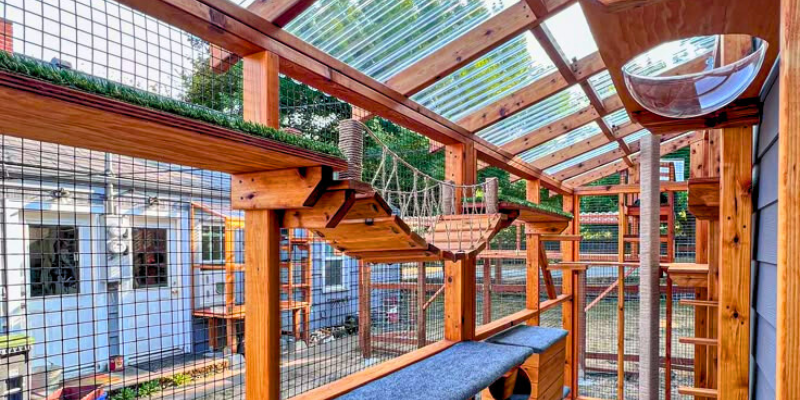
Custom-designed outdoor enclosures ranging from compact patios to multi-level luxury catios. Perfect for Maryland's diverse outdoor living culture and year-round entertaining.
Explore Outdoor Catios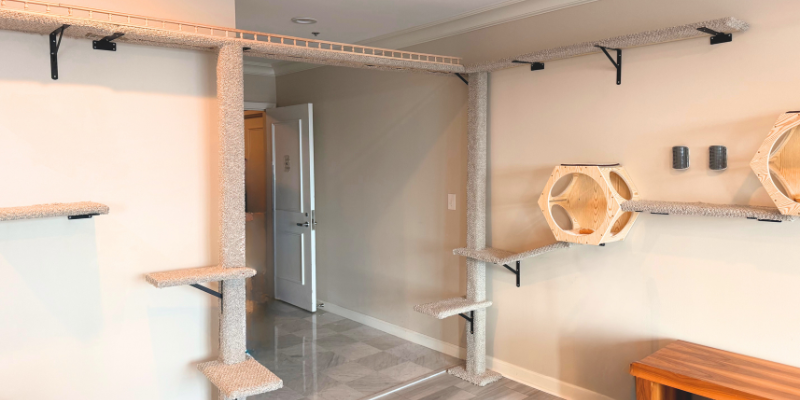
Cat Walls
Custom indoor climbing walls and shelving systems. Create vertical playgrounds for your cats in any room.
Explore Cat Walls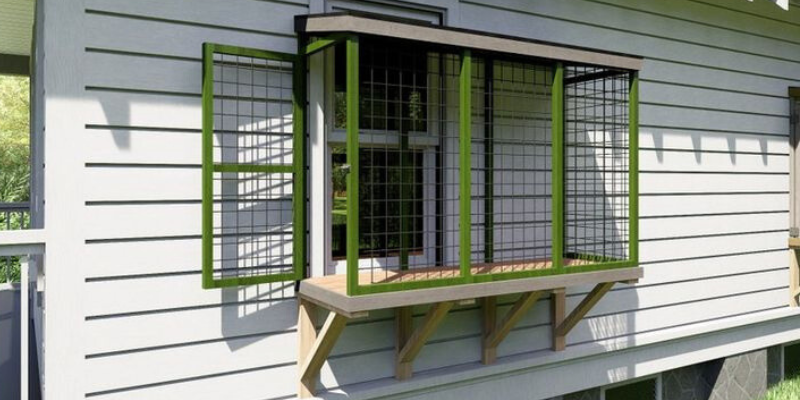
Window Boxes
Compact window-mounted sunbathing enclosures. Ideal for apartment dwellers or as a starter catio project.
Explore Window BoxesHow It Works
Free Consultation
Talk with our team about your space, cat's needs, and budget. No obligation.
Custom 3D Design
We design your catio in 3D so you see exactly what you'll get. Unlimited design revisions.
Approve Your Design
Once you love your design, we handle all permits and HOA approval coordination.
Expert Installation
Our licensed team builds your catio with precision and attention to detail.
Ready to Give Your Cats Safe Outdoor Freedom?
Every project starts with a free consultation. Tell us about your cats and your space.
Schedule Free QuoteServing 24+ Maryland Cities
Baltimore Metro & Central Maryland
DC Suburbs & Potomac Region
Western Maryland & Eastern Shore
Why Catios Are Essential for Maryland Cat Owners
Maryland cat owners face unique environmental challenges that indoor-only living doesn't address. Our state's distinctive four-season climate, wildlife, and geography make outdoor enrichment both desirable and dangerous without proper protection. As a licensed catio builder, Monument Catios designs and builds safe, customized outdoor cat enclosures that let your feline friends experience Maryland's natural beauty while staying completely protected from harm.
Whether you live in Baltimore's urban neighborhoods with raccoons and foxes, suburban areas with coyotes, or Maryland's waterfront regions with salt-air corrosion challenges, Maryland cats need specialized solutions. A properly designed outdoor cat enclosure transforms your outdoor space into a secure paradise where cats can sunbathe, climb, hunt insects, and experience fresh air and natural light—all without exposure to the dangers that would make unsupervised outdoor time a constant worry.
Cat enrichment directly impacts behavioral health, reducing destructive indoor behaviors, stress, and obesity. Maryland's four distinct seasons provide varied outdoor enrichment throughout the year—spring flowering, summer greenery, colorful fall foliage, and winter snow. A catio makes outdoor access safe year-round, while eliminating the guilt and anxiety of letting your cat roam free.
Four-Season Climate Protection
Maryland's four-season climate presents diverse environmental challenges throughout the year. Summer humidity and heat (80-95°F) require excellent ventilation and shade. Spring rains and fall moisture demand proper drainage. Winter snow and ice require structures designed for snow load and ice prevention. Monument Catios designs incorporate multiple layers of climate protection specifically for Maryland's seasonal conditions.
Our designs feature weather-resistant shade structures that manage summer sun and humidity while maintaining excellent airflow year-round. Proper drainage prevents water accumulation during spring and fall rains. Materials are selected specifically for moisture resistance—we use cedar framing, galvanized wire mesh, marine-grade fasteners, and all-weather finishes that withstand humidity, temperature swings, and seasonal moisture variations.
For winter, our Maryland catios include roof pitch and drainage for snow load, reinforced construction for wind and ice, and corrosion-resistant materials (especially in coastal areas) that withstand humidity and salt air. We design with Maryland's specific seasonal variables in mind—not generic catio plans adapted for Maryland, but Maryland-first design.
Maryland Wildlife Safety
Maryland presents diverse predators and dangerous animals that cat owners must consider. Raccoons are ubiquitous in urban and suburban areas, highly intelligent and determined. Foxes inhabit both rural and suburban regions. Coyote populations are expanding across the state. But these are just some of Maryland's predator list.
Hawks and great horned owls hunt from above, particularly in spring and fall. Copperhead snakes, while not common, inhabit parts of Maryland and pose serious danger in warm months. In Western Maryland and some suburban areas, black bears can be a concern. Osprey near waterfront and coastal areas also hunt birds but are less likely to threaten grounded cats. Every area of Maryland has unique predator profiles.
Monument Catios enclosures are designed with heavy-gauge, predator-resistant screening built to withstand Maryland wildlife. We use multiple layers of security: secure entry/exit points with double-door systems, reinforced frame construction, and screening installed with predator-prevention tension that prevents pushing or cutting. Every enclosure is designed with the assumption that a determined predator will test it—and fail.
Unlike flimsy portable pet tents or DIY screening solutions, Monument Catios designs permanent structures using contractor-grade materials, installed by licensed professionals. Your cats' safety is the foundation of every design.
Seasonal Outdoor Enrichment
Maryland's four distinct seasons provide rich and varied outdoor enrichment throughout the year. Spring (March-May) offers warming weather, blooming flowers, and insect emergence. Summer (June-August) brings lush vegetation and natural light. Fall (September-October) offers moderate temperatures and fascinating leaf fall activity. Even winter (November-February) can provide outdoor enrichment during mild days, with snow and ice creating new sensory experiences.
A properly designed Maryland catio means your cats aren't confined indoors during the most pleasant weather months—and can safely access outdoor space during cooler, snow-free times in winter. They get natural light (and in summer, regulated shade), fresh air, temperature variation, and sensory enrichment that simply can't be replicated indoors. Seasonal variation actually enhances enrichment.
The physical and behavioral benefits are substantial. Cats with access to outdoor enrichment show reduced stress, better weight management, improved muscle tone, healthier fur, and fewer behavioral problems. They experience natural hunting behavior through stalking insects and birds (safely behind screening), natural climbing and jumping, and circadian rhythm stimulation from natural light cycles.
Maryland Building & HOA Compliance
Maryland's building regulations are specific to our climate and development patterns. Different jurisdictions—Baltimore City, Baltimore County, Montgomery County, Prince George's County, Anne Arundel, and dozens of other municipalities—have varying requirements for structures like catios. What's permitted in one county might require modification in another. Urban codes differ significantly from suburban and rural requirements.
Many Maryland neighborhoods also have HOA restrictions that govern exterior structures. Failure to get proper HOA approval can result in fines, liens on your property, or forced removal of the structure. Monument Catios manages all of this complexity. Our licensed team understands Maryland's building codes inside and out. We handle permit applications, engineering submissions, HOA coordination, and inspections—all on your behalf. Monument Catios holds Maryland MHIC License #167535-02.
This is a critical advantage of working with Monument Catios rather than attempting DIY construction or hiring general contractors unfamiliar with residential enclosure requirements. We know which Maryland municipalities require permits (most do), what technical documentation is needed, how to navigate HOA architectural review committees, and how to design structures that facilitate smooth inspections.
Our all-in pricing covers design, materials, and construction—not for rework, fines, or forced removal. We design from the beginning with full compliance in mind.
Multi-Cat Households & Senior Cat Considerations
Maryland has one of the highest pet ownership rates in the country, and multi-cat households are increasingly common. When multiple cats share a home, vertical territory becomes critical for reducing conflict and stress. A well-designed cat wall provides distinct zones where each cat can claim their own space—elevated perches, enclosed cubbies, and observation platforms that create a three-dimensional territory map inside your home. For outdoor catios, multiple entry points and separate resting areas prevent one cat from "guarding" access.
Senior cats have different needs than younger cats. Gentle ramp angles replace steep ladders. Wider shelves with low lips prevent slipping. Cushioned platforms ease joints. Every Monument Catios design starts with a cat profile questionnaire that covers ages, activity levels, health conditions, and individual personalities. This isn't a one-size-fits-all product—it's a custom environment designed around the specific cats who will use it every day.
Catio Design Across Maryland's Climate Zones
Maryland isn't one climate — it's four distinct seasons. From the humid Chesapeake Bay waterfront to the Appalachian Mountains, every region presents different design challenges. Monument Catios designs custom solutions for each Maryland climate zone, not one-size-fits-all designs adapted after the fact.
Baltimore Metro & Central Maryland (Sea Level–400 ft)
The Baltimore metro area experiences hot, humid summers (85-95°F) with high moisture content, moderate winters with occasional snow, and true spring/fall transitional seasons. Summer humidity is the primary design challenge — proper ventilation, moisture-resistant materials, and shade management are essential. Catios here emphasize airflow above all else, with strategic venting to prevent humidity buildup that promotes mold and decay.
Wildlife threats in this region include raccoons (highly intelligent and determined), foxes, coyotes in suburban areas, and hawks. Catio foundations here often require good drainage to prevent water pooling during heavy rainstorms and spring flooding potential. Many homes back onto parks or wooded areas, which increases wildlife interaction.
DC Suburbs & Montgomery/Prince George's County (100–600 ft)
The DC suburbs experience an urban heat island effect — temperatures run 3-5°F warmer than surrounding rural areas. This brings earlier springs and extended falls, but also means higher humidity concentrations and more air pollution that affects materials. Catios here need excellent filtration and material selection that handles both heat and moisture. Many homes in this region have restrictive HOAs that require design integration with existing landscaping and architecture.
Fox and coyote populations have expanded significantly in recent years. Design must emphasize predator-resistance while maintaining the aesthetic standards typical of suburban communities. Spring flooding is a concern for properties near streams, requiring elevated foundations and proper drainage design.
Chesapeake Bay & Eastern Shore (Sea Level–50 ft)
Waterfront and near-waterfront properties face unique challenges: salt air corrosion, higher wind exposure, more frequent and intense storms, and increased moisture. Catios here require marine-grade hardware, stainless steel fasteners exclusively, and finishes rated for salt air exposure. Even inland Eastern Shore properties experience maritime air patterns that accelerate corrosion of standard materials.
This region has rich wildlife: osprey near water, hawks, various waterfowl, and terrestrial predators. Winter storms can be severe, requiring structures designed for significant wind and occasional snow load. The combination of wind and moisture creates accelerated material degradation that demands superior engineering.
Western Maryland & Appalachian Region (1,000–3,000+ ft)
Western Maryland experiences genuine mountain winters with significant snowfall (20-60+ inches depending on elevation), colder temperatures (winters regularly dropping to 0°F or below), and distinct seasons. This is bear country — black bears inhabit the region, particularly in Garrett County and higher elevations. Catio design here emphasizes snow-load-rated roofing, proper anchoring for wind, insulated resting areas for cold mornings, and predator-resistance designed specifically for bear-country safety.
Summer temperatures are moderate (70-80°F), extending outdoor season when properly designed. Materials must handle freeze-thaw cycles that can crack standard wood and make fasteners vulnerable to corrosion. Snow load calculations are critical — roofs here must support significant accumulated snow without structural failure or ice dam formation.
Southern Maryland & Anne Arundel (50–300 ft)
Southern Maryland experiences tidewater climate patterns with moderate temperatures, variable precipitation, and occasional hurricane-force weather. This region serves as a transition between the urban heat island of DC and the maritime influence of the Chesapeake Bay. Humidity is moderate to high, and storm surge and heavy rain can overwhelm standard drainage systems during tropical systems.
Catios here need solid engineering for wind and water, elevated to handle heavy rains and occasional flood conditions. Raccoon and coyote populations are well-established. Design must balance weather protection with ventilation that manages humidity.
Each of these regions requires specific engineering knowledge that generic catio companies simply don't have. Monument Catios designs for your specific Maryland microclimate — not for an imagined average that doesn't exist anywhere in the state.
Materials Selected for Maryland's Climate Conditions
Material selection makes or breaks a catio in Maryland. Materials that perform well in other regions fail quickly under Maryland's unique combination of humidity, seasonal temperature extremes, moisture cycling, and salt air exposure (in coastal areas). Every material in a Monument Catios design-build project is specifically selected for Maryland performance. As a catio builder with Maryland experience, we know exactly which materials survive our climate.
Structural Framing
We use cedar framing for all structural elements — naturally rot-resistant, insect-repellent, and built to handle Maryland's moisture and humidity year-round. Cedar holds up beautifully without chemical treatment, unlike untreated pine or fir that warp, rot, and deteriorate within a single Maryland season. All enclosure screening uses galvanized wire mesh for escape-proof durability. In coastal areas, all fasteners are stainless steel exclusively. Inland, hot-dip galvanized or stainless steel fasteners prevent corrosion that compromises structural integrity over time.
Screening & Mesh
The screening that keeps your cats safe while allowing airflow is perhaps the most critical material decision. We use heavy-gauge galvanized or stainless steel mesh — not fiberglass window screening that predators can tear through or that moisture degrades within seasons. Our mesh gauge is selected based on local wildlife assessment: heavier gauge in areas with active coyote populations, with smaller mesh openings where copperhead snakes are a concern. Every panel is tensioned during installation to prevent sagging that could create gaps or weak points over time.
Roofing & Shade
Shade structures use UV-resistant polycarbonate panels, commercial-grade shade cloth rated for multi-year Maryland weather exposure, or solid roofing with reflective coatings that manage heat and shed moisture. We avoid materials that become brittle under temperature swings or that absorb and hold water that promotes rot. Roof design includes proper pitch for snow load and water drainage, gutters to direct runoff away from foundations, and overhang dimensions calculated for your property's seasonal sun angle and prevailing wind patterns.
Flooring & Foundations
Maryland's varied soil types and seasonal water table fluctuations create unique foundation challenges that most catio companies have never dealt with. Catio foundations are designed for your specific soil conditions — concrete footings with proper drainage for permanent structures, adjustable post bases for areas with frost heave or seasonal settling, and comprehensive drainage provisions that prevent spring water and heavy rains from pooling inside the enclosure. Flooring options include elevated composite decking (which stays cooler and drier), artificial turf with drainage backing, or elevated gravel floors for maximum drainage in wet seasons.
Finishes & Coatings
Every exposed surface receives moisture-resistant finishes rated for Maryland conditions. We use marine-grade sealants on wood, powder coating on metals, and pet-safe stains and paints formulated for exterior Maryland exposure with moisture protection. These aren't the same products you'd find at a hardware store — they're commercial-grade coatings designed to maintain appearance and protection for years under the humidity and moisture cycling that would degrade standard retail finishes in months.
What Goes Into Every Monument Catios Project
Whether you choose an outdoor catio or an indoor cat wall, every project is custom-designed for your home, your cats, and Maryland's diverse climate. Here's what makes our designs stand apart.
Outdoor Catio Features
Seasonal Climate Engineering
All-weather roofing, strategic ventilation, and moisture management keep cats comfortable through Maryland's humid summers and snowy winters.
Multi-Level Climbing Structures
Ramps, shelves, bridges, and towers give cats vertical territory to explore. Every level is designed with secure footing and shaded resting spots.
Wildlife-Proof Construction
Reinforced mesh panels, secure locking mechanisms, and escape-proof joints protect cats from raccoons, foxes, coyotes, hawks, and copperhead snakes.
All-Weather Materials
Cedar framing and galvanized wire mesh chosen specifically to withstand Maryland's humidity, moisture cycling, seasonal storms, and UV exposure.
Sensory Enrichment
Integrated planters for cat-safe plants like catnip and cat grass, observation perches for bird watching, and textured surfaces for scratching and play.
Flexible Access Options
Lockable cat doors, human-access doors, and window-entry tunnels let you control when and how your cats enter the catio. Integrates seamlessly with your home.
Indoor Cat Wall Features
Custom Wall-Mounted Systems
Every installation is designed around your specific walls, ceiling height, and room layout. No two cat walls are identical because no two homes are.
Staggered Climbing Shelves
Varied heights and spacings accommodate cats of all ages and abilities, from energetic kittens to senior cats who prefer gentle step-ups.
Cubby Hideaways & Perches
Enclosed resting boxes and open window perches give cats choices between cozy seclusion and panoramic "cat TV" vantage points.
Furniture-Grade Finishes
Solid wood, premium plywood, and pet-safe finishes in colors that complement your home's interior. Cat walls that look like intentional decor, not afterthoughts.
Integrated Scratch Surfaces
Sisal-wrapped posts, scratch pads, and textured panels built directly into the wall system. Protects your actual furniture while satisfying natural instincts.
Modular & Expandable
Start with a few shelves and grow over time. Our modular mounting system lets you add new pieces as your cat family grows or as your cats discover new favorites.
Year-Round Catio Maintenance in Maryland
A well-built catio requires minimal maintenance, but Maryland's four-season climate does demand seasonal attention. Here's what to expect throughout the year to keep your catio safe, clean, and comfortable for your cats.
Spring Preparation (March–April)
Spring brings warming weather, increased rainfall, and returning wildlife activity. Clean all mesh panels thoroughly after winter's accumulated debris. Check for moisture damage from spring rains — look for soft spots in wood, rust on fasteners, and mold growth in damp areas. Inspect roofs for damage from winter storms and ensure gutters are clear and directing water away from foundations. Test all drainage systems before heavy spring rains arrive. Check catio integrity for any winter damage — ice stress, wind damage, or settling issues. Spring is peak wildlife season, so verify that screening is tight and entry points are secure.
Summer Management (June–August)
Summer brings heat and humidity — Maryland's primary climate challenge. Monitor ventilation systems frequently to ensure airflow isn't blocked by debris, pollen buildup, or nesting insects. Check water stations regularly (multiple stations encourage hydration). Inspect shade coverage throughout the day — summer sun angles change, and you may need to add additional shade as the season progresses. Trim any overhanging tree branches that could create new entry points or allow predator access. This is the season when insects are most active, so maintain regular cleaning to prevent mosquito breeding areas and maintain cat comfort.
Fall Inspection (September–October)
Fall brings cooler weather, leaf fall, and preparation for winter. Clear all accumulated leaves and debris before they clog drainage systems. Inspect gutters and downspouts thoroughly — fall leaf accumulation is the primary cause of winter water damage. Check weatherproofing on all joints and fasteners. Verify that winterization preparations are underway — this is the time to add insulation to resting areas if they lack it. Black bears are actively foraging in Western Maryland; if your catio is in bear country, ensure doors and access points are absolutely secure. Prepare heating systems if your catio will be used during winter.
Winter Care (November–February)
Winter brings snow, ice, and cold temperatures. Monitor roof snow load regularly — remove accumulated snow if it approaches structural limits (this depends on your specific roof design). Ensure heated shelters remain functional and that insulation is adequate for comfort. Clear ice dams from gutters and roofs before they cause interior water damage. Check that foundation drainage isn't frozen or blocked. Monitor structural stress from freeze-thaw cycles — wood that absorbed moisture in fall can crack when it freezes. Salt used on surrounding driveways can accelerate corrosion; rinse affected areas periodically. Ensure your cats have access to liquid water — frozen water stations are dangerous.
Annual Professional Inspection
We recommend an annual inspection of structural connections, mesh tension, and foundation condition. Maryland's seasonal temperature swings — from below 0°F winter mornings to 90°F summer afternoons — create material stress. An annual inspection catches minor wear before it becomes a safety or structural concern. Monument Catios clients can schedule maintenance consultations to keep their investment in top condition for years to come.
The Monument Catios Difference
Licensed & Insured
Every installation is performed by fully licensed Maryland MHIC contractors with active insurance and bonding. Your home is protected.
3D Design Preview
See exactly what your catio or cat wall will look like before any work begins. Approve the design, request changes, and feel confident in the final result.
Permits & HOA Handled
We manage all permit applications, engineering documentation, HOA submissions, and inspections. You don't touch a single form.
Cat-First Design
Founded by cat owners, for cat owners. Every design decision starts with what's best for your cats — their safety, comfort, enrichment, and happiness.
Understanding Maryland's MHIC Licensing & Your Protection
Maryland requires most residential construction and home improvement work to be performed by contractors licensed through the Maryland Home Improvement Commission (MHIC). This isn't just bureaucracy — it's one of the strongest consumer protection systems in the country, and it directly impacts the quality and safety of your catio installation.
What MHIC Licensing Means
Maryland's MHIC requires licensed contractors to maintain a surety bond that protects homeowners, demonstrate competency through examination and experience requirements, and submit to ongoing regulatory oversight. MHIC-licensed contractors must maintain liability insurance as a licensing requirement. If a licensed contractor does substandard work, homeowners have recourse through Maryland's Home Improvement Guarantee Fund — a financial safety net that doesn't exist when you hire unlicensed operators.
MHIC licensing ensures that contractors understand Maryland-specific building codes, permitting requirements that vary by jurisdiction (Baltimore City differs from Baltimore County differs from Montgomery County), and inspection standards. Different areas have different moisture management standards, snow load requirements, and wildlife/safety considerations that unlicensed contractors simply won't understand.
Our Licensed Team
Every Monument Catios installation is performed by our fully licensed, insured Maryland MHIC team. Monument Catios holds Maryland MHIC License #167535-02, Arizona ROC License #364641, and Pennsylvania HIC Registration #PA214722. We verify current MHIC licensing status, insurance coverage, and bond standing before any work begins on your project. Our design and construction process ensures that all work meets Maryland building codes, passes required inspections, and creates no future liability for your property. When you work with Monument Catios, you get the full protection that Maryland's contractor licensing system was designed to provide.
Frequently Asked Questions
Catio costs vary significantly based on size, materials, complexity, and your location within Maryland. Outdoor catios typically start around $4,000 and can exceed $20,000 for larger, luxury installations. Cat walls start around $2,000, and window boxes start around $2,500. We provide completely free custom quotes after consulting about your specific space, needs, and goals. There's no obligation, and we're happy to discuss your budget upfront.
Permit requirements vary significantly by city and county in Maryland. Baltimore City, Baltimore County, Montgomery County, and other jurisdictions each have different thresholds for permanent structures. This is where our licensed team's expertise is invaluable—they know exactly what your specific jurisdiction requires. We handle all permit applications, engineering documentation, and inspections. It's included as part of our design and construction service.
Maryland's four distinct seasons are central to our design philosophy. We incorporate shade structures for summer, ventilation for humidity management, drainage for spring/fall rains, and insulation for winter. Our catios are designed specifically for Maryland's climate—not generic designs adapted for heat. We consider seasonal changes in sun angle, humidity management, water drainage, snow load capacity, and wind resistance throughout the year.
Raccoons, foxes, coyotes, hawks, owls, and copperhead snakes—Maryland has a diverse collection of wildlife threats. Our catios use heavy-gauge, predator-resistant screening designed to withstand Maryland wildlife. Every design assumes that determined predators will test the structure—and fail. Every enclosure includes secure entry/exit points, reinforced framing, and professional installation that exceeds what DIY or amateur construction can provide.
Installation timelines typically range from 2-6 weeks depending on design complexity and permitting. Simpler projects like window boxes might be completed in a few days. Larger outdoor catios with custom features may take longer. We'll provide a detailed timeline during your free consultation and keep you updated throughout the process.
Yes. Our licensed team coordinates directly with HOA boards and architectural committees. We prepare all necessary documentation, renderings, and design specifications to demonstrate that your catio meets your community's guidelines. We handle the entire approval process so you don't have to.
We select materials specifically for Maryland's demanding environment: moisture-resistant screening, marine-grade metals (especially for coastal areas), cedar framing and galvanized wire mesh, all-season finishes, and comprehensive drainage systems. Everything is chosen to withstand humidity, temperature extremes, seasonal storms, and Maryland's unique climate stressors.
Window box catios and certain indoor cat wall designs work well for renters and apartment dwellers, since they can be installed with minimal structural modification. Larger outdoor catios typically require property owner approval. We'll help you determine which options work for your living situation and can prepare documentation to present to landlords or property management companies if needed.
DIY catios from kits or online plans are generic — they're not designed for Maryland's diverse climate, your specific property layout, or your cats' individual needs. Custom-designed catios are tailored to your exact space, built with materials selected for Maryland's humidity, moisture, and seasonal conditions, and installed by our licensed team who ensure structural integrity and code compliance. The result is a safer, longer-lasting, better-looking structure built specifically for your cats and your home.
Well-designed, professionally installed catios can be a selling point for cat-owning buyers and contribute positively to a home's perceived value. They're particularly attractive in Maryland where outdoor living space is increasingly valued year-round. Catios built with proper permits and licensed contractors become legitimate home improvements that can be disclosed during sale. Poorly built or unpermitted structures, on the other hand, can actually hurt property value — another reason professional installation matters.
We serve Maryland cities and regions across Baltimore Metro, DC Suburbs, the Chesapeake Bay and Eastern Shore, and Western Maryland. This includes Baltimore, Annapolis, Bethesda, Frederick, and 40+ additional communities. If your city isn't listed, contact us—we may be able to serve you.
What You Get
Have questions? Call us:
(301) 479-6273